How it works
Read the Fifteen-Minute Start
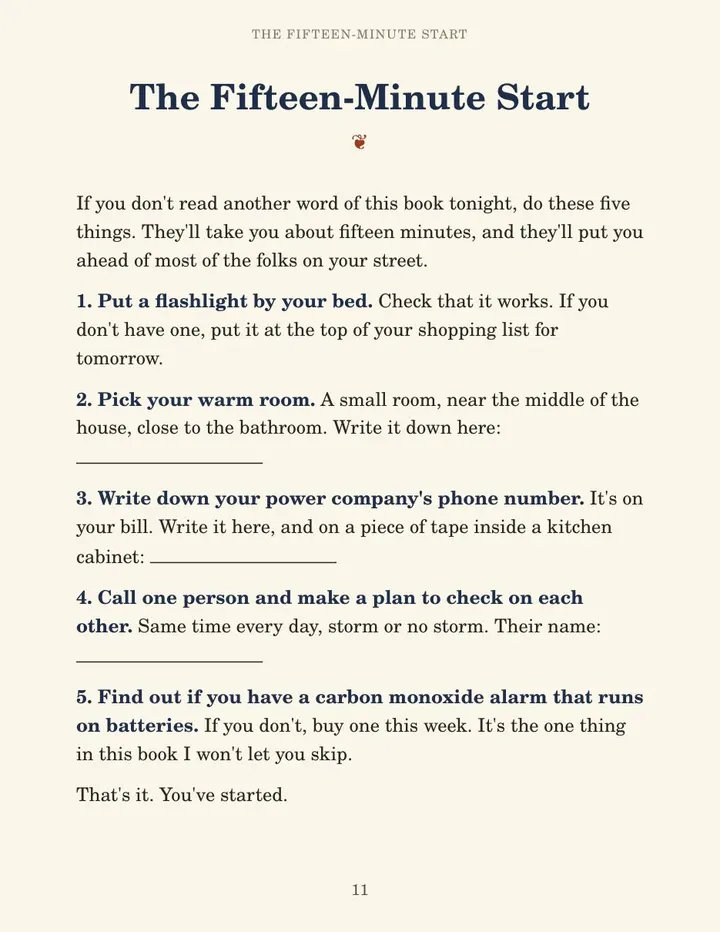
Put a working flashlight by your bed, pick a warm room, and find your power company's number.
Go a chapter at a time
At the end of each one, mark off what you've done on the checklist. There's no hurry.
Put the plan where you'll find it
Fill in your Storm Plan, put the three Fridge Door pages on the refrigerator, and agree with somebody on a daily check-in.
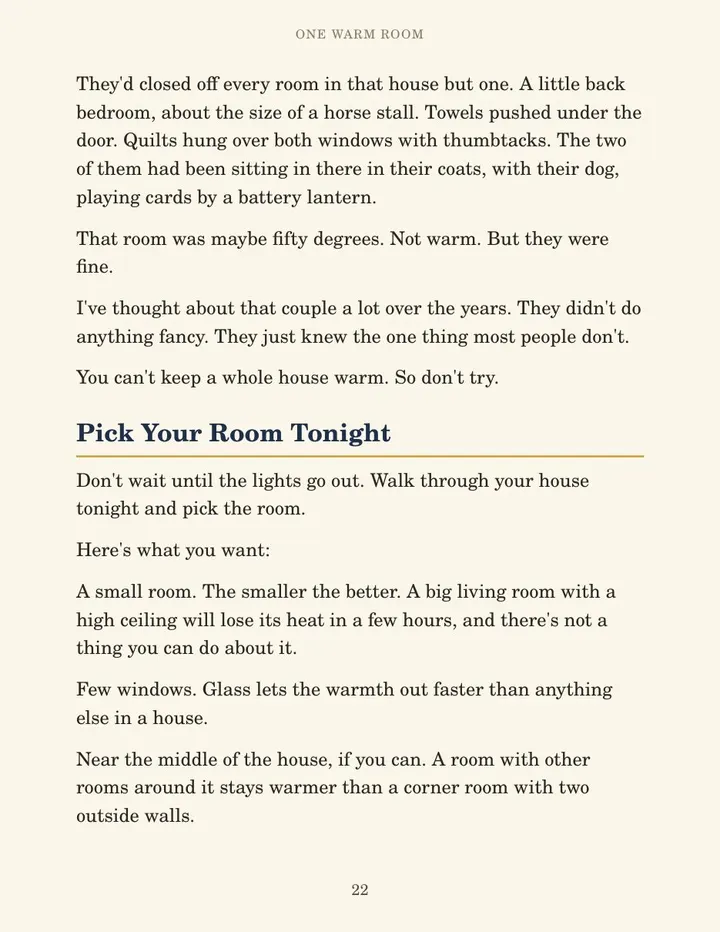
“You can't keep a whole house warm. So don't try.”
The honest way to get ready
Buy it on a quiet Tuesday
You don't have to buy a houseful of equipment before a storm. Start with the towels and blankets you've already got. Then add a little each week with your regular groceries.
When the storm's already coming
- A crowded store, and everybody had the same idea
- The batteries and water are the first things gone
- You buy whatever's left, whether you need it or not
- One big bill, all at once
- Every decision made in a hurry
A little at a time
- One short list a week, with your regular groceries
- Light first, then a carbon monoxide alarm
- Only what the plan calls for, and nothing fancy
- A few dollars here and there instead of one big bill
- Ready in eight weeks, or sixteen if you'd rather go slower
A generator isn't this plan, and this plan isn't a generator. If you can't stay warm, or you rely on powered medical equipment, arrange another safe place to go ahead of time.
Look inside
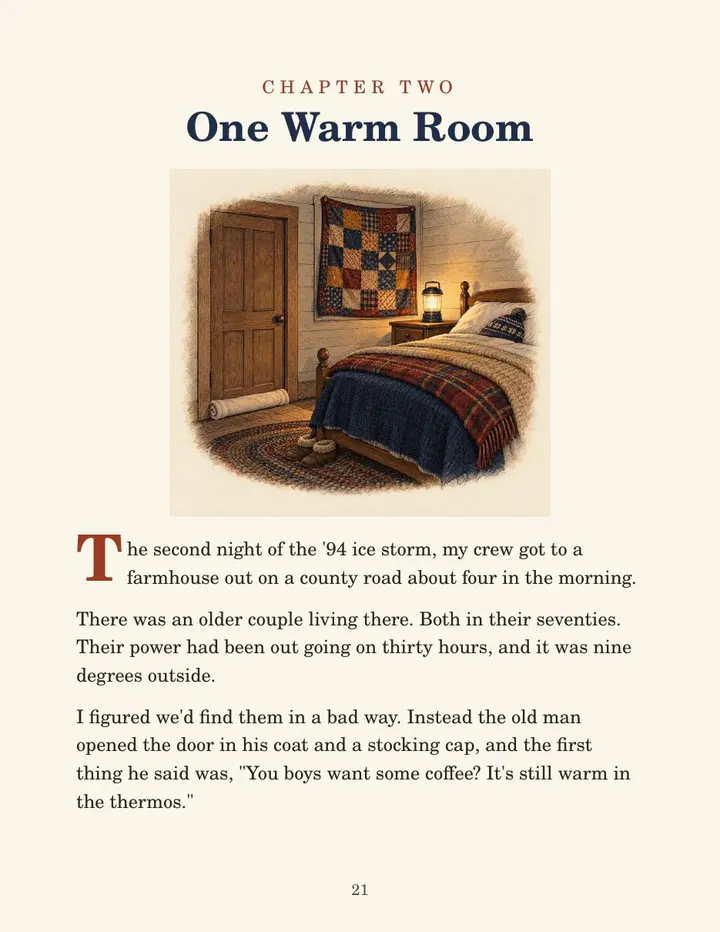
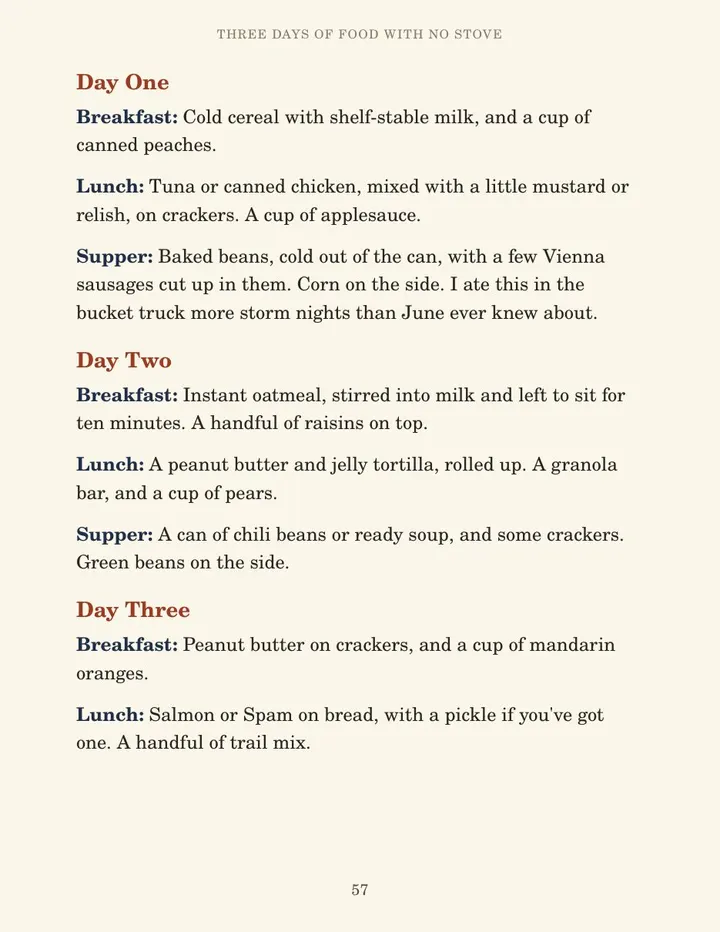
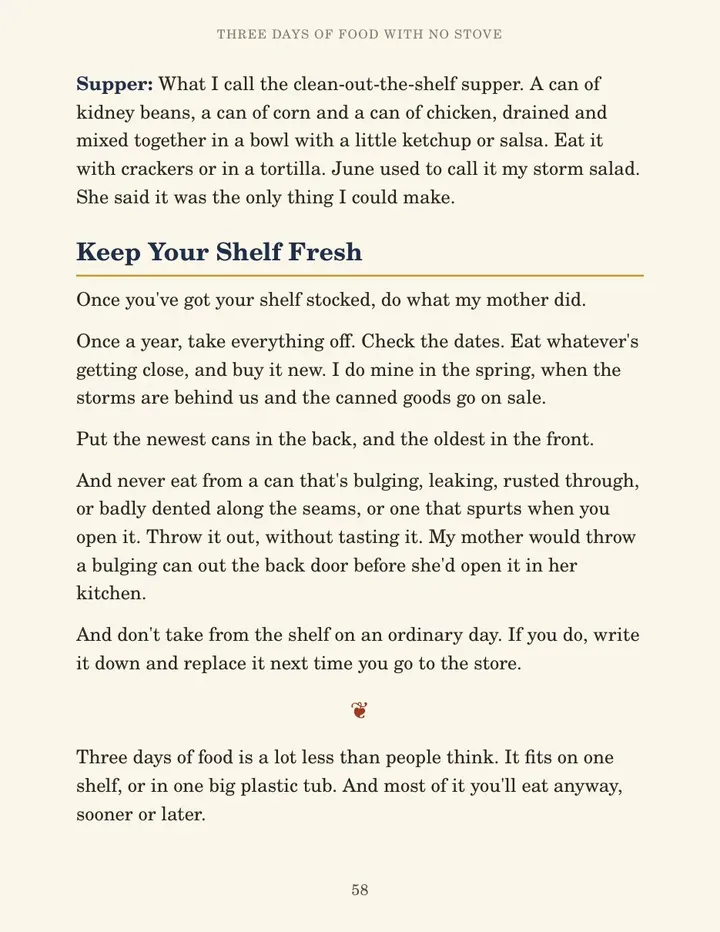
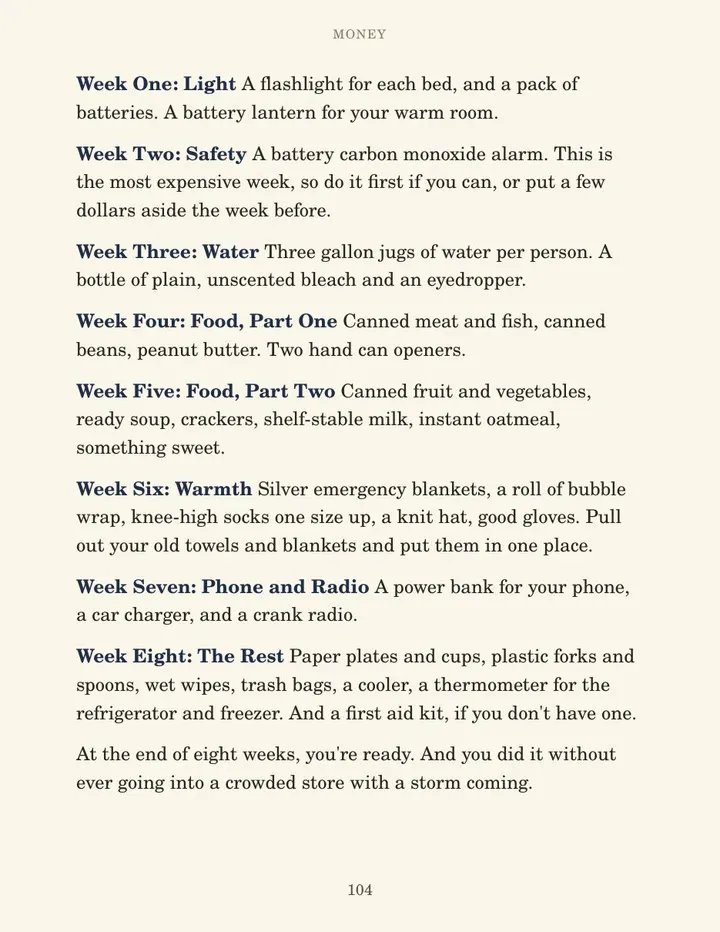
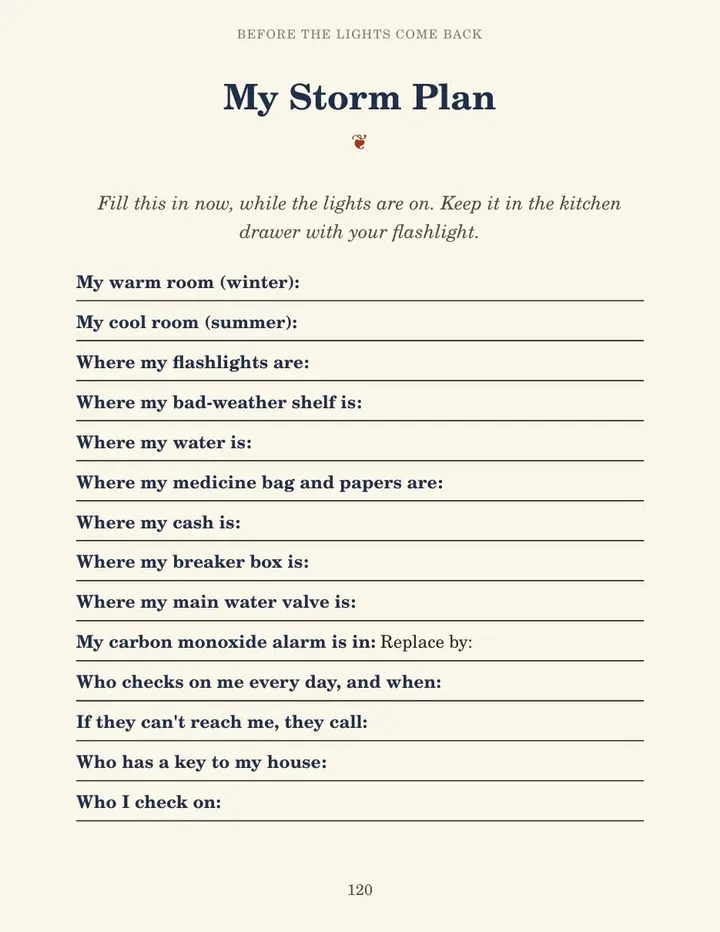
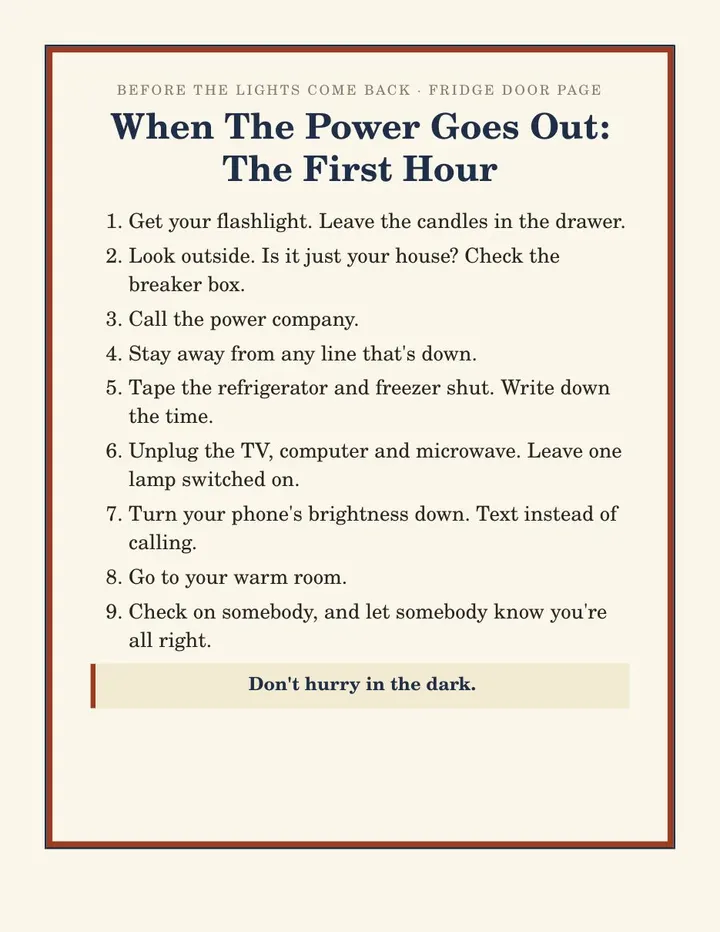
Don't take my word for what's in it. Have a look at the actual pages: the first fifteen minutes, a warm room, three days of meals, and the lists you can put to work. Tap any page to read it larger.
← Swipe to see more pages →
What's inside
I wrote down what I'd want June or Carol to have beside them if the power went out.
- The First Hour: what to do while the house still holds its warmth p. 12
- One Warm Room: choose it and close off the drafts p. 21
- The Three Things Never to Do: generators, indoor flames, and carbon monoxide p. 33
- Light Without Fire: see your way safely through the house p. 42
- Three Days of Food With No Stove: a shelf of familiar food and nine no-cook meals p. 49
- Water: set aside what you need p. 62
- Medicines, Oxygen and Health Needs: make a plan with your care team p. 71
- Safe at Home When You Live Alone: check-ins, doors, and falls p. 81
- The Car, the Phone and the Radio: keep a way to hear and reach people p. 91
- Money: cash on hand and a quiet eight-week shopping plan p. 99
- Forgotten Ways: useful habits my folks handed down p. 108
- At the back: My Storm Plan, a medicine and emergency card, the Master Shopping List, and three Fridge Door pages p. 120
The digital edition
Before the Lights Come Back
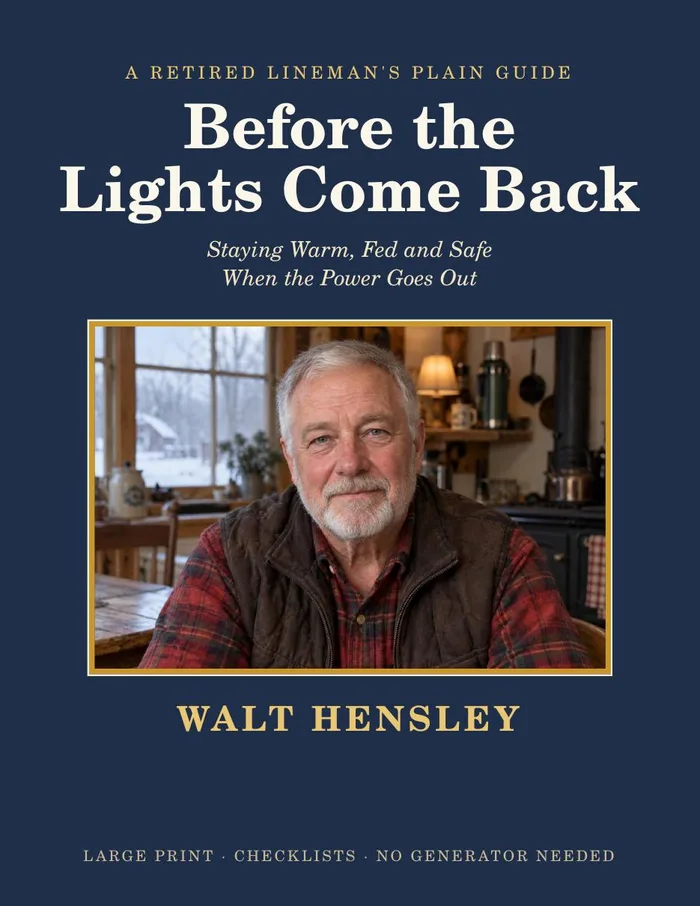
The 134-page PDF
A Retired Lineman's Plain Guide to Staying Warm, Fed and Safe When the Power Goes Out
- All eleven chapters in large, 16-point type
- A checklist at the end of every chapter
- My Storm Plan, ready to fill in
- A medicine and emergency card
- The Master Shopping List and the eight-week plan
- Three Fridge Door pages to print and put up
$19 one payment, no subscription
Buy the digital book · $19Sent by download right after you pay. Read it on a phone, tablet, or computer, or print it at home.
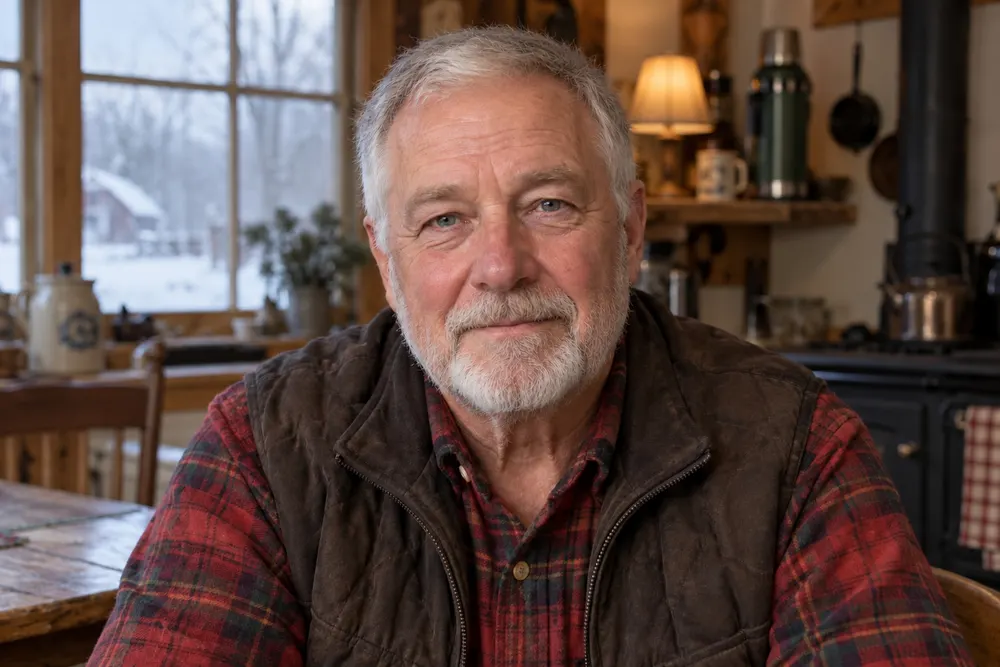
From the kitchen table
Walt Hensley
Carol kept after me for years to put this down. I spent thirty-one years working power lines in Ohio, and I saw what happens when folks have a little plan before the storm. My mother taught me to save what we had and buy only what mattered.
So I sat down at my kitchen table and wrote it out the way I'd tell a neighbor. I'm not a writer. I'm an old lineman, so it's plain, with no fancy words. Start with the first page. Then call somebody who lives alone and make sure they've got a plan too.
Walt
About Walt: Walt Hensley is a fictional, AI-presented character. His biography and stories are fictional. The book's practical guidance draws on U.S. safety sources and is not professional, medical, or electrical advice.
Questions, answered plainly
Is this a printed book?
Not yet. The $19 edition is a downloadable PDF. You're welcome to print the checklists and Fridge Door pages for your own use.
I'm not good with computers. How do I get it?
After you pay, Gumroad shows you a download button and emails you a link to the book. Tap the link and the book opens. If a grandchild or neighbor is handy, they can print the whole thing for you in a few minutes.
Is the type large enough to read?
Yes. The pages are full US Letter size with 16-point type. There's no separate larger-print edition yet.
Do I need a generator?
No. You don't need one to use the book. Some households and some medical equipment do need a different backup plan, so talk with your power company and your care team. If you can't stay safe at home, leave.
I live alone. Is there something in it for me?
Yes. Chapter Eight covers a daily check-in, door and light habits, and avoiding falls in the dark. Fill in your Storm Plan with somebody you trust.
Do I need to buy a lot of equipment?
No. You start with the towels and blankets you already have, then add a few things each week with your regular groceries. The eight-week list spells out every week.
Is it medical or electrical advice?
No. I'm not a doctor, and I'm not your electrician. Follow your doctor or pharmacist, local officials, your power company, and the instructions for your own equipment over anything in the book.
Is this a subscription?
No. One payment, one time. No membership and no monthly bill.
The lights don't wait for a convenient day.
Start with one flashlight, one warm room, and somebody who knows to check on you. The rest is written down for you.
Get the digital book · $19General U.S.-focused guidance, not a promise that staying home is safe in every outage.